
Why Kids Need Nature More Than Screens - Gittin Creative Blog
Why Kids Need Nature More Than Screens

Modern childhood looks very different from the one many parents remember.
For previous generations, free time often meant climbing trees, building dens, exploring fields, or simply spending hours outdoors with friends. Today, many children spend a significant portion of their time interacting with screens instead.
Tablets, phones, televisions, and gaming devices are now part of everyday family life. Screens can be useful tools for learning, entertainment, and even connection. However, when screen time begins to replace real-world exploration, many parents notice something feels out of balance.
Children may become restless, irritable, or bored more easily. Getting outside might require more encouragement than it once did. Quiet creative play can be harder to initiate.
This isn’t because children have changed. It’s because their environments have.
The good news is that reconnecting children with nature doesn’t require dramatic lifestyle changes or long trips into the countryside. Small shifts in daily routines can help children rediscover curiosity, imagination, and calm.
Let’s explore why nature is so important for childhood and how families can gently rebalance screen time with meaningful nature experiences.
How Screens Affect Children’s Attention
Screens are designed to capture attention.
Bright colours, quick scene changes, sound effects, and reward systems keep children engaged for long periods of time. Many apps and games are intentionally designed to encourage continuous interaction.
For young brains, this level of stimulation can make slower, quieter activities feel less interesting by comparison.
Children may find it harder to focus on tasks that require patience, such as reading, drawing, or building. When screens are removed suddenly, they might feel bored or frustrated because their brains have become used to fast-paced stimulation.
This doesn’t mean screens are harmful in every situation. Technology can offer educational opportunities and entertainment. However, when screens dominate free time, they can crowd out activities that support deeper thinking and creativity.
Nature offers the opposite experience.
Instead of rapid stimulation, nature invites children to slow down, observe, and explore.
Watching ants carry food, listening for bird songs, or noticing how plants grow over time encourages patience and curiosity. These experiences help develop attention in a very different way.
The Benefits of Outdoor Play
Outdoor play provides children with something screens simply cannot: a real, sensory world.
When children spend time outside, they experience:
Movement
Climbing, running, digging, and exploring strengthen muscles and coordination.Fresh air and sunlight
Natural light helps regulate sleep patterns and supports healthy development.Discovery
Nature is full of surprises. A child might find an unusual insect, a feather, or a hidden snail under a rock.Problem solving
Building a stick den or designing a fairy garden encourages children to think creatively.
Outdoor play also tends to be less structured than many indoor activities. Children create their own games, make up stories, and explore freely.
These experiences help build confidence and independence.
Nature Boosts Creativity and Imagination
One of the most powerful benefits of nature is the way it sparks imagination.
A fallen tree branch can become a dragon’s tail. A small patch of soil might turn into a fairy village. A collection of stones could form the walls of a tiny castle.
Nature provides open-ended materials that encourage storytelling and creativity.
Unlike toys or digital games with fixed rules, natural environments allow children to invent their own adventures.
This kind of imaginative play is incredibly valuable for cognitive development. It helps children practise storytelling, problem solving, and emotional expression.
Even simple activities like drawing animals, writing stories about garden creatures, or designing imaginary habitats can keep children mentally connected to the natural world.
Simple Ways to Reconnect Kids With Nature
You don’t need a large garden or countryside walks to help children experience nature.
Small, consistent moments often make the biggest difference.
Here are some simple ways to reconnect children with the natural world:
Create a nature observation habit
Encourage children to notice something new each day. This could be a bird, a flower, a cloud shape, or an insect.
Plant something together
Growing herbs, flowers, or vegetables gives children a sense of responsibility and excitement as they watch plants develop.
Go on mini nature walks
Even a short walk around the neighbourhood can become an adventure when children look for birds, leaves, or interesting stones.
Watch wildlife
Setting up a small bird feeder or observing insects in the garden can quickly spark curiosity.
Use imagination
Encourage children to invent stories about animals or magical creatures that might live in the garden.
These simple routines help children see nature as part of everyday life rather than something distant or occasional.
Indoor Nature Activities When You Can't Go Outside
Of course, family life isn’t always perfectly suited for outdoor adventures.
Sometimes the weather is rainy. Sometimes children are unwell. Sometimes families are travelling or simply having a quiet day indoors.
The good news is that children can still stay connected to nature even when they are inside.
Nature-inspired activities can keep curiosity alive while providing calm alternatives to screens.
Some examples include:
Nature-themed puzzles and games: Word searches, mazes, and matching activities featuring animals, plants, or insects can be both fun and educational.
Drawing and creative prompts: Children might draw their favourite garden animal or design their own imaginary nature creature.
Nature journaling: Encourage children to write or draw things they have seen outside recently.
Story writing: A child could invent a story about a hedgehog adventure, a dragon protecting a vegetable patch, or a fairy living in a tree.
Observation from windows: Even watching birds through the window or noticing changes in the weather can inspire curiosity. These types of activities help children continue thinking about nature, even when they are indoors.
Over time, this curiosity often leads children back outside to explore more.
Building Healthier Screen Habits as a Family
Reducing screen time doesn’t need to become a constant battle.
The goal isn’t to eliminate technology entirely but to create a healthy balance between digital entertainment and real-world experiences.
Many families find it helpful to introduce simple routines such as:
screen-free mornings
technology-free family meals
quiet activities before bedtime
outdoor time after school
When screens are no longer the default option, children often rediscover other ways to spend their time.
Nature-based activities, creative projects, and imaginative play gradually take centre stage again.
A Gentle Way to Reset Family Screen Habits
For families who feel stuck in a cycle of constant screen use, it can help to follow a clear step-by-step approach.
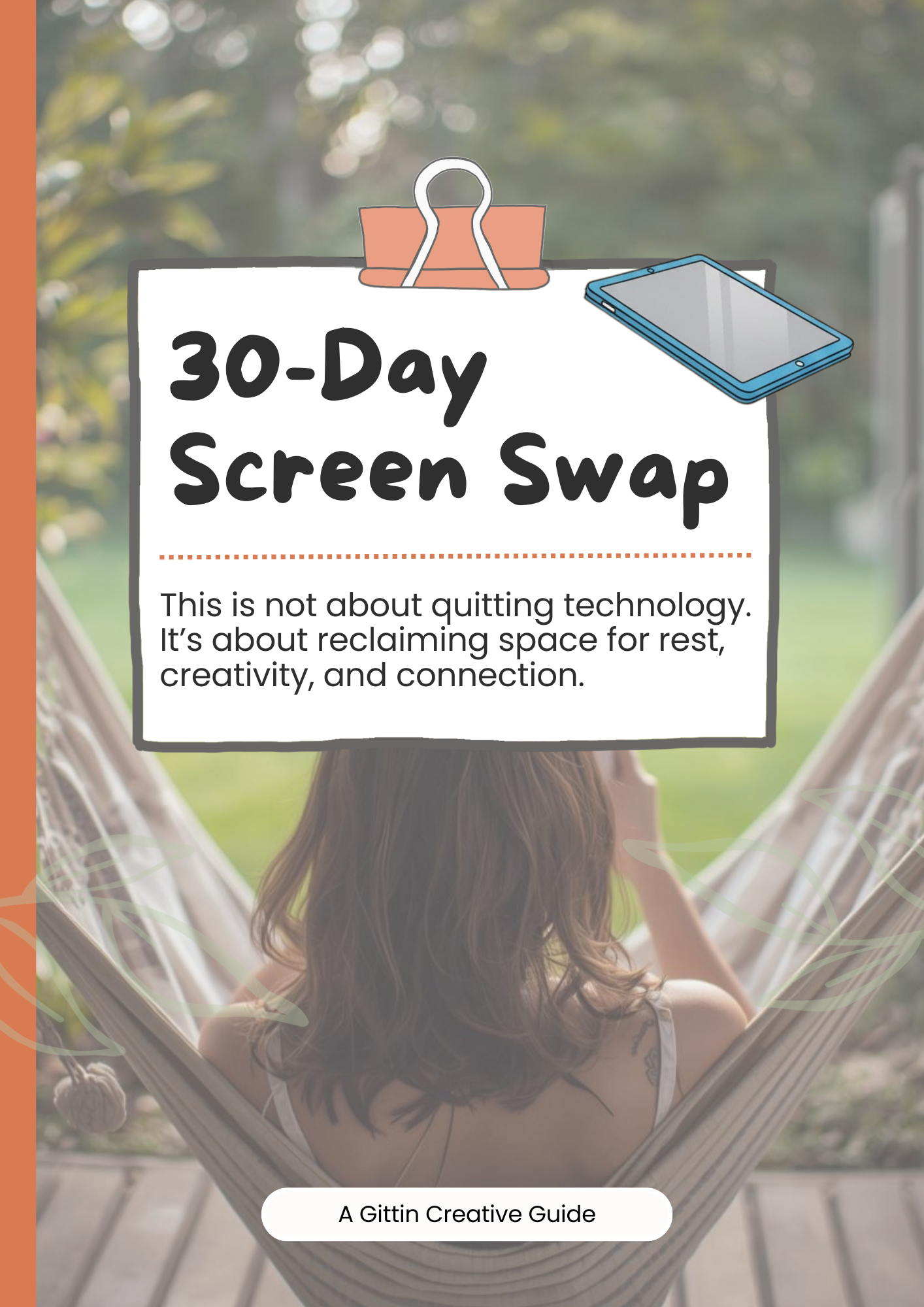
The 30-Day Screen Swap Challenge was designed to help parents gradually build healthier digital habits without arguments or overwhelm.
The challenge focuses on:
becoming aware of current screen habits
setting simple boundaries
creating new daily routines
introducing nature-based activities
reclaiming family time and focus
Rather than removing technology suddenly, it helps families replace screen habits with meaningful alternatives.
Encouraging a Childhood Connected to Nature
Children don’t need perfect outdoor environments or endless free time to benefit from nature.
What they need most are opportunities to observe, imagine, explore, and ask questions about the world around them.
Whether it’s spotting birds in the garden, planting seeds together, solving nature puzzles on a rainy afternoon, or inventing stories about magical forest creatures, these small experiences help children develop a lasting connection with the natural world.
In a world filled with digital distractions, nature offers something refreshingly simple.
Curiosity. Creativity. Calm.
And sometimes, the best adventures begin just outside the front door — or even at the kitchen table with a nature-inspired activity sheet.
A Gentle Way to Encourage Screen-Free Play
Nature activities like birdwatching are a wonderful way to reduce screen time while encouraging curiosity and creativity.
If you’re looking for a simple way to build healthier family habits around screens, you might also enjoy the 30-Day Screen Swap Challenge., which helps parents gradually replace screen habits with meaningful activities.
YES, TELL ME MORE ABOUT THE SCREEN SWAP CHALLENGE!
“Helping kids stay connected to nature through imagination, puzzles, and creative activities — whether they’re inside or outside.” - Gittin Creative